
# Citizen Request Management
Is Your Legacy 311 Process Working Against You?

CivicPlus
August 23, 2026
3 min
Modern 311 request management systems should help governments respond faster, serve residents more consistently, and more easily earn resident trust. When long lines, never-ending phone calls, and stacks of paper get in the way, however, your 311 request management process can become a barrier to effective service delivery.
Here are five signs your municipality’s 311 service request process may be doing more bad than good, and how to fix it.
Sign 1: Residents Are Frustrated with Public Spaces and the Reporting Process
If your 311 request management process is manual, clunky, confusing, or buried under stacks of paper, residents and staff alike will avoid using it. And that means more frustration, turnaround delays, and an erosion of public trust.
When the official process is difficult to find or residents receive no confirmation after submitting a request, they may post on social media, contact an elected official, or call several departments until they reach someone who can help. The same concern can then enter the municipality through several channels, creating duplicate requests and additional follow-up work.
If your residents are upset and don’t feel they have reliable channels of communication, they will find other ways to make sure they are heard.
The information gathered during intake matters, too. A vague email may leave staff searching for the location or asking follow-up questions. A structured request that includes a map pin, photo, and relevant details gives the responsible department a clearer starting point.
How to Fix It
- Offer simple, mobile-friendly web and app intake with plain-language categories.
- Capture exact location and photos in one step.
- Auto-confirm submission and set expectations for next steps without promising an exact resolution date when one isn’t available.
- Let residents report an issue without first determining which department is responsible for it.
Sign 2: Requests Get Lost Between Departments
Many service requests cross departmental lines. A drainage complaint may involve public works and stormwater staff, while a fallen tree could require attention from parks, streets, or utilities. Those handoffs become risky when departments track requests in separate inboxes, spreadsheets, or systems.
One team may believe it transferred a request while the receiving team has no record of it. Staff may enter the same issue more than once or search through email threads to understand what has already happened. Residents may receive different answers depending on whom they contact.
A fragmented process also makes it difficult to answer a basic question: Who owns this request right now? Staff need a complete history showing when the request arrived, where it was sent, what action was taken, and why it was reassigned or closed.
How to Fix It
- Standardize fields, statuses, and request categories across departments for apples-to-apples reporting over time.
- Centralize intake and routing with shared queues, clear ownership, timestamped handoffs, auto-assignment, and escalation.
- De-duplicate requests via location, asset, and description matching, and maintain a single shared case history that follows the request from intake through resolution.
- Notify the next team when responsibility changes so a transfer doesn’t depend on a separate email or phone call.
Sign 3: Your Team Has No Way to Strategically Prioritize Requests
If requests arrive as walk-ins, phone calls, or generic emails, triage slows and urgent issues blend in.
Accepting requests through several channels can make services more accessible, but every submission still needs to enter the same workflow. Otherwise, a web form may contain complete information while a phone request remains in handwritten notes and an email reaches a department without a category or location.
A 2025 field experiment in Calgary using a randomized design found that issues submitted through the 311 service request system were about 26% more likely to be resolved within three to 10 days. The researchers also found that the effect was consistent across communities regardless of socioeconomic status.
How to Fix It
- Require consistent information such as the request category, location, and photos where relevant.
- Give employees a way to enter phone and in-person reports directly into the same queue used for online submissions.
- Use assignment rules to route requests by location, category, asset, or department and flag potential hazards for immediate review.
- Escalate requests that remain unassigned or open beyond an established service target.
- Use dashboards to give supervisors and crews a current view of priorities, approaching deadlines, and backlogs.
CivicPlus® 311 SeeClickFix CRM’s AI-Improved Category Search and Photo Analysis can analyze submitted photos and suggest an appropriate service request category, simplifying reporting for residents and reducing misclassified requests for staff.
Sign 4: Residents Don’t Know What’s Happening After They Submit a Report
In many communities, 311 service request submissions feel like a black box, where residents submit a request and then get a stock closure note weeks later or nothing at all. That lack of reliability undermines trust and discourages future reporting.
Staff may already be reviewing the request, inspecting the location, or completing the work. But when residents can’t see any evidence of that progress, they may call again or submit the same report a second time. Staff then spend time answering questions that a clear status update could have addressed.
Even a resolved request can leave residents confused if it closes with an internal code or generic message that doesn’t explain what staff found or what action was taken.
How to Fix It
- Use plain-language statuses such as “Received,” “Assigned,” “In Progress,” and “Resolved.” When possible, include timestamps and identify the responsible department.
- Send automatic, accessible updates when a request is received, assigned, updated, or resolved.
- Give residents a meaningful closure reason that explains what staff found or what action was taken.
- Enable two-way messaging so staff can request a clearer location, photo, or other information without creating a separate email chain.
- Explain how requests are reviewed, prioritized, transferred, and closed so residents know what to expect.
Sign 5: You Can’t Show Progress or Justify Budgets
If you can’t report on volume, time-to-first-action, on-time resolution, and backlog by request type, department, or service area, it’s hard to defend budgets or target resources.
When request data is spread across inboxes, spreadsheets, paper records, and departmental systems, reporting becomes a manual project. Staff must combine incomplete information, remove duplicates, and determine whether departments measured the same activity consistently. Leaders may still be unable to see which teams carry the largest backlogs or which service issues are becoming more common.
A 2025 study of New York City’s 311 Service Request dataset identified problems involving data validity, consistency, and efficiency. The researchers pointed to the need for consistent field definitions, validation, and data-management practices to make open 311 data more reliable and useful for analysis.
Reliable data also helps municipalities recognize patterns that individual requests may not reveal. Repeated drainage complaints could point to a larger infrastructure problem, while recurring reports tied to the same asset may show that continued repairs are no longer cost-effective.
How to Fix It
- Standardize metrics, like intake-to-assignment, time to first action, first-time resolution, reopen rate, and departmental backlog.
- Track performance by request type, department, and service area rather than relying on municipality-wide averages alone.
- Use dashboards for daily management and monthly or quarterly reports to identify long-term changes in demand and performance.
- Apply those findings to staffing, budgeting, service targets, and capital planning.
- Consider publishing selected, clearly explained measures to show residents and elected officials the volume of work being completed.
Don’t Let Outdated 311 Request Management Processes Become a Liability
Legacy processes rarely stop working all at once. They become less effective one manual workaround at a time. A department creates a spreadsheet because the shared process lacks a needed field. An employee keeps personal notes to remember follow-ups. Residents call several offices because request statuses are unavailable. Managers assemble reports by hand because the underlying information is stored in different formats.
Each workaround may address an immediate need, but together they create a process that is difficult to manage and harder to improve.
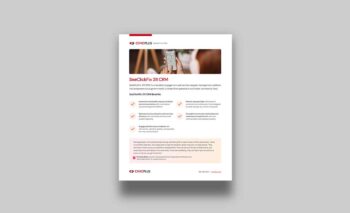
CivicPlus® SeeClickFix 311 CRM brings intake, routing, case history, resident communication, and reporting into one system. It includes:
- Smarter intake and routing: Structured forms, GIS mapping, duplicate detection, and automated assignment.
- Transparent communication: Real-time status updates, notifications, and closure surveys residents can trust.
- Connected workflows: Integrations with GIS, code enforcement, asset management, Community Development, and other municipal systems.
- Actionable reporting: Dashboards for service targets, demand trends, backlogs, and departmental performance to guide budgets and staffing.
A shared 311 request management process gives municipalities one place to receive requests, route them to the right team, maintain a complete case history, and keep residents informed from intake through resolution.
Explore the self-guided demo to see how SeeClickFix 311 CRM can improve intake, routing, communication, and reporting.
Written by
CivicPlus

Ready to Learn More?
CivicPlus provides a one-stop tool to receive, track, and respond to resident service requests.