
# Agendas & Meetings
Shift from Digitization to Automation and Instant Accessibility
Learn how modern meeting workflows make public meeting information clearer, searchable, and easier for residents to access.
Get the Guide
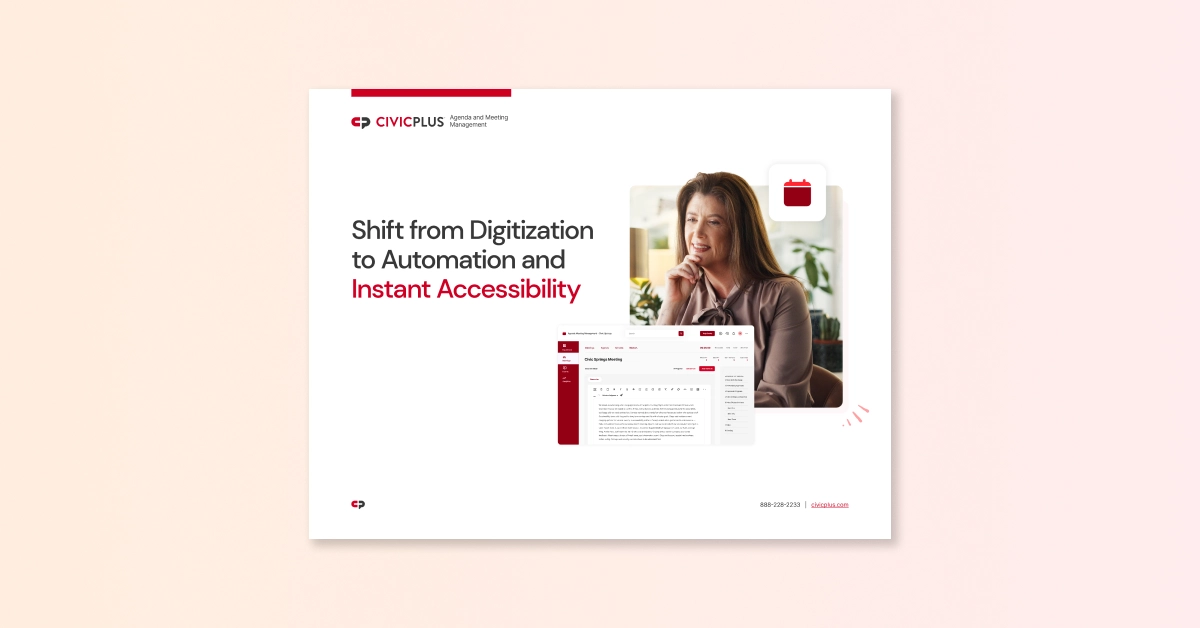
Publishing agendas, minutes, packets, and recordings online help communities move away from paper and expand public access. When meeting information exists primarily as static documents, however, residents often have to download large packets and search through hundreds of pages to find a single agenda item, decision, or vote.
Modern meeting workflows organize information in a connected structure, so agenda items, attachments, actions, votes, and video timestamps stay linked throughout the entire meeting lifecycle. This approach helps communities publish information more clearly, reduce manual work for staff, and give residents a better path to the information they care about.
What you’ll find inside:
- Why posting meeting packets online is only the first step toward transparency
- Common challenges created by PDF-first publishing workflows
- How structured meeting data creates searchable information
- The ways automated workflows reduce repetitive work and improve consistency
- How connected meeting records support accessibility and future innovation
Download the guide to learn how modern meeting workflows help communities improve transparency, accessibility, and efficiency.